Current War Situation in 2026
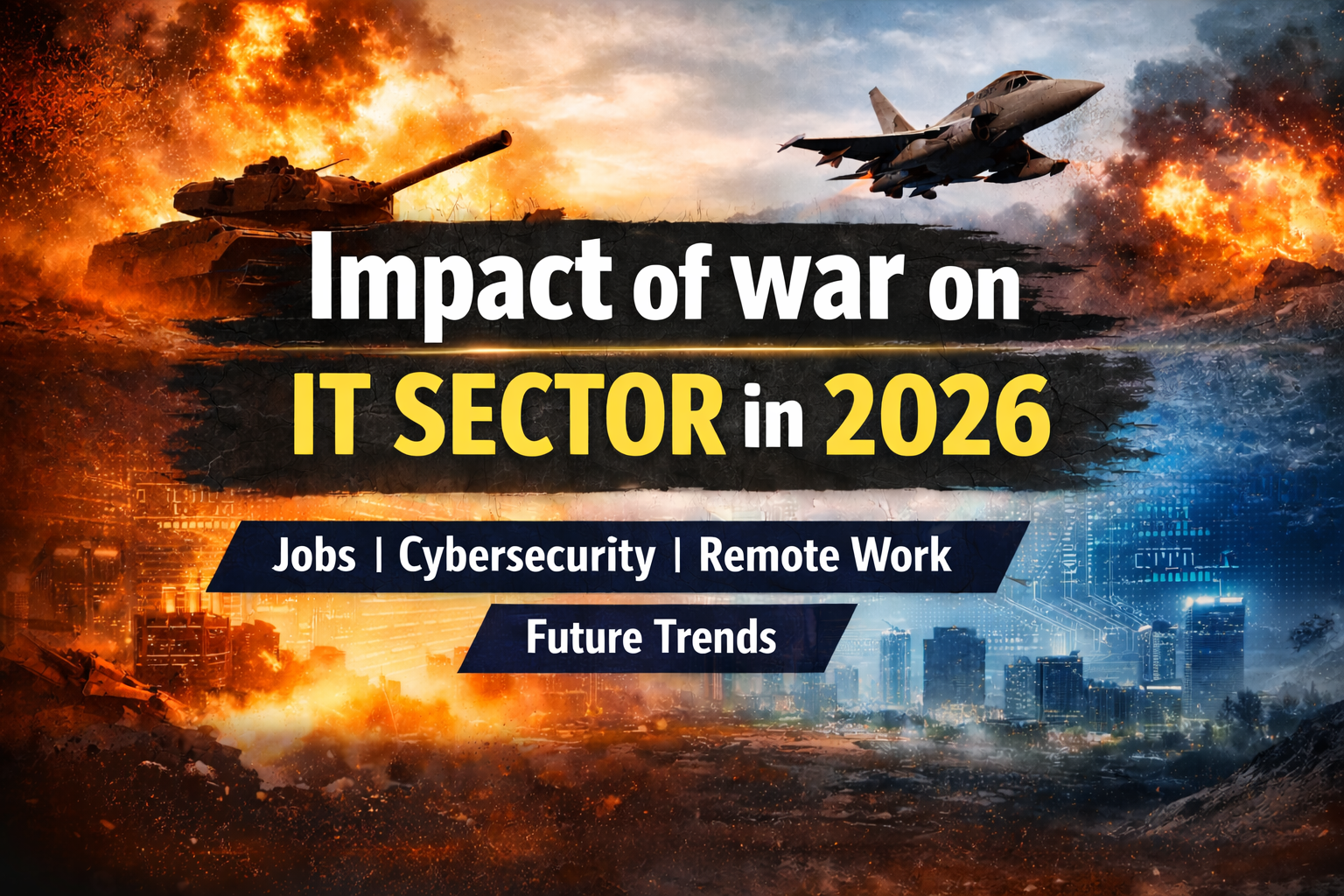
The global war situation has created economic instability and disrupted international markets. Businesses across industries are facing uncertainty, and the IT sector is no exception. The impact of war on IT sector is becoming more visible as companies struggle to maintain stability in uncertain conditions.
How War is Affecting the IT Sector
- Project Delays and Reduced Investments
Companies are becoming cautious about spending, leading to delays or cancellations of IT projects. This is one of the major aspects of the impact of war on IT sector, affecting growth and innovation. - Impact on IT Jobs
Hiring freezes, layoffs, and reduced opportunities are affecting IT professionals worldwide. The impact of war on IT sector is clearly seen in job market instability and reduced hiring trends. - IT Supply Chain Disruptions
War impacts the production and transportation of hardware components like semiconductors and servers. - Rise in Cybersecurity Threats
Cyberattacks have increased significantly, making cybersecurity a top priority for organizations. - Growth of Remote Work
Remote work and cloud computing are becoming essential for business continuity.
Opportunities in the IT Industry
Despite challenges, the IT sector is seeing growth in:
- Cybersecurity services
- Cloud computing
- Artificial Intelligence and automation
These opportunities highlight that the impact of war on IT sector is not only negative but also driving innovation and transformation.
Future of IT Sector During Global Conflicts
The IT industry is expected to continue evolving with a stronger focus on:
- Digital resilience
- Secure infrastructure
- Remote collaboration tools
Conclusion
The current war situation has both negative and positive impacts on the IT sector. While challenges like job uncertainty and project delays exist, new opportunities are also emerging.
IT professionals should focus on upgrading skills and adapting to changing industry demands.